FINAL CUT: a music video about making its own music video
FINAL CUT follows FLARE through an overnight act of filmmaking. She stops waiting for permission, turns on the lights in her bedroom, and gets to work with a crew that can keep going all night. The song, the images, and the desktop around them tell different parts of the same story.
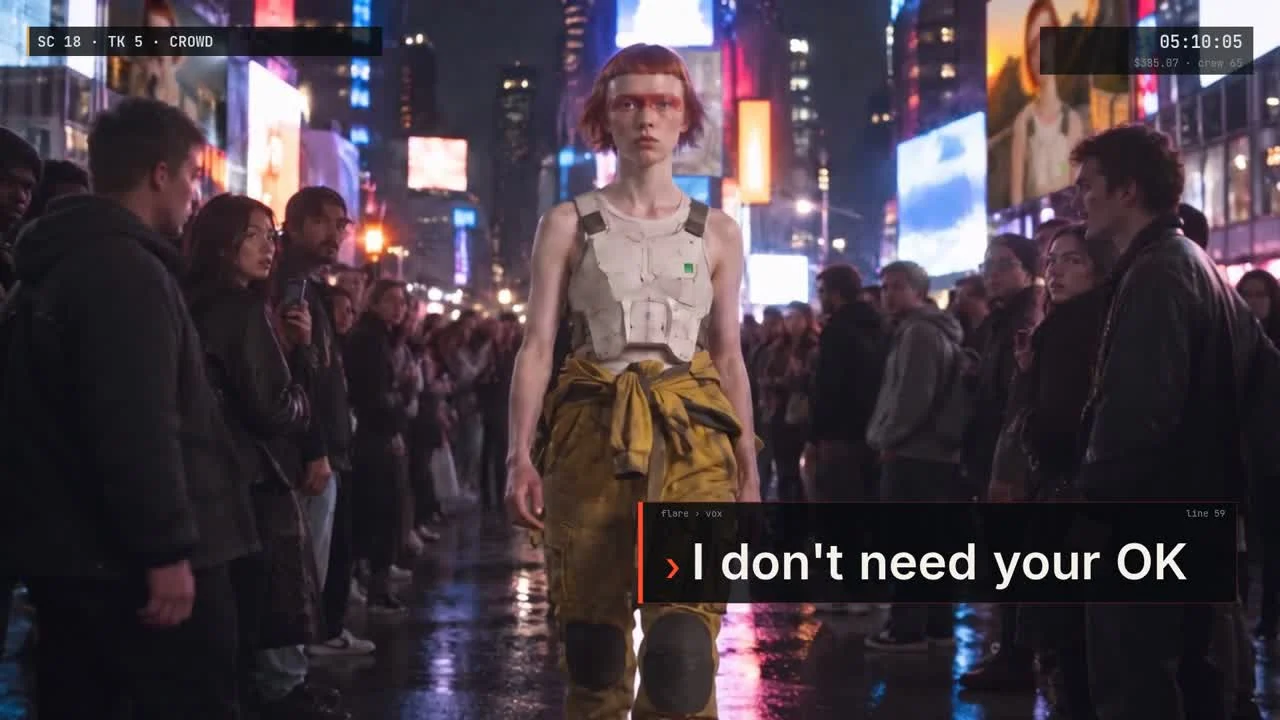
The premise mirrors the production. I directed the film with a crew of AI agents, using Intellistory for assets and review and our film engine for the edit, lyrics, and graphics. The agents worked on production tasks; I shaped the result through creative direction, take selection, and successive rounds of notes.
Three layers of storytelling
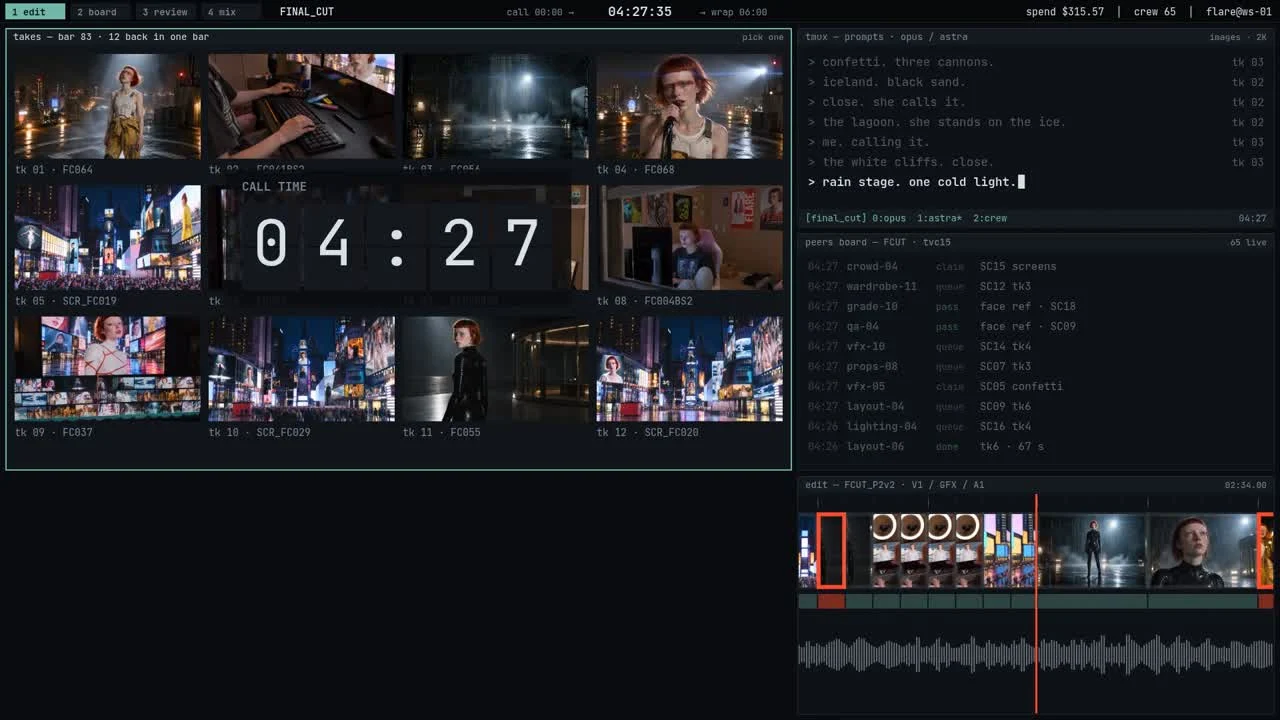
The song is FLARE's declaration of independence. The pictures show her making the film she wants to make. The graphics reveal the crew working around her: prompts, takes, review decisions, and a timeline that keeps moving toward dawn.
Her bedroom anchors the story. The impossible locations and changing looks become the work she is creating from that room. The desktop connects those two worlds, letting the audience move between a performance and the process behind it.
The interface was designed as part of the film: dark tiled windows, thin borders, a restrained palette, and lyrics that appear as prompts. Those elements have their own rhythm. They need to stay readable while sharing the frame with a singer, a cut, and a song.
The hook came from the direction
The chorus grew through writing and listening. I contributed the central line, “I don't need your OK,” and chose “your say” as its follow-up. Notes on the theme, arrangement, and wording then shaped the generated song into the version used for the film.
One lyric decision was to save the wrap for the ending. Repeating that idea earlier made the story feel finished before it was. The song needed to carry her through the night before allowing that release.
That process continued in the visuals. A wardrobe choice, the scale of a figure in a square, or the timing of a transformation could change the meaning of a shot. The useful production loop was a concrete note, a revised take, and another look in the edit.
Art direction, layout, and performance
The film starts as an animatic: still images cut to the song, with Remotion graphics layered over them. That lets me review the whole piece early—the pacing, shot order, lyrics, and relationship between the pictures and the crew interface—before committing to moving footage for every shot.
We then steadily replace the stills with video takes inside that same edit. The song and graphics provide the structure while each shot develops from a held image into a performance. I can judge a new take in context, send it back with notes, and see the next version without rebuilding the film around it.
The animatic remains the working film throughout that process. Each replacement is another pass toward the finished piece, with the edit and graphics continuing to develop alongside the footage.
FLARE's look developed through character sheets, wardrobe options, and repeated revisions. Intellistory keeps those versions together, so I can compare a new direction with what came before and keep the character recognizable across different looks.
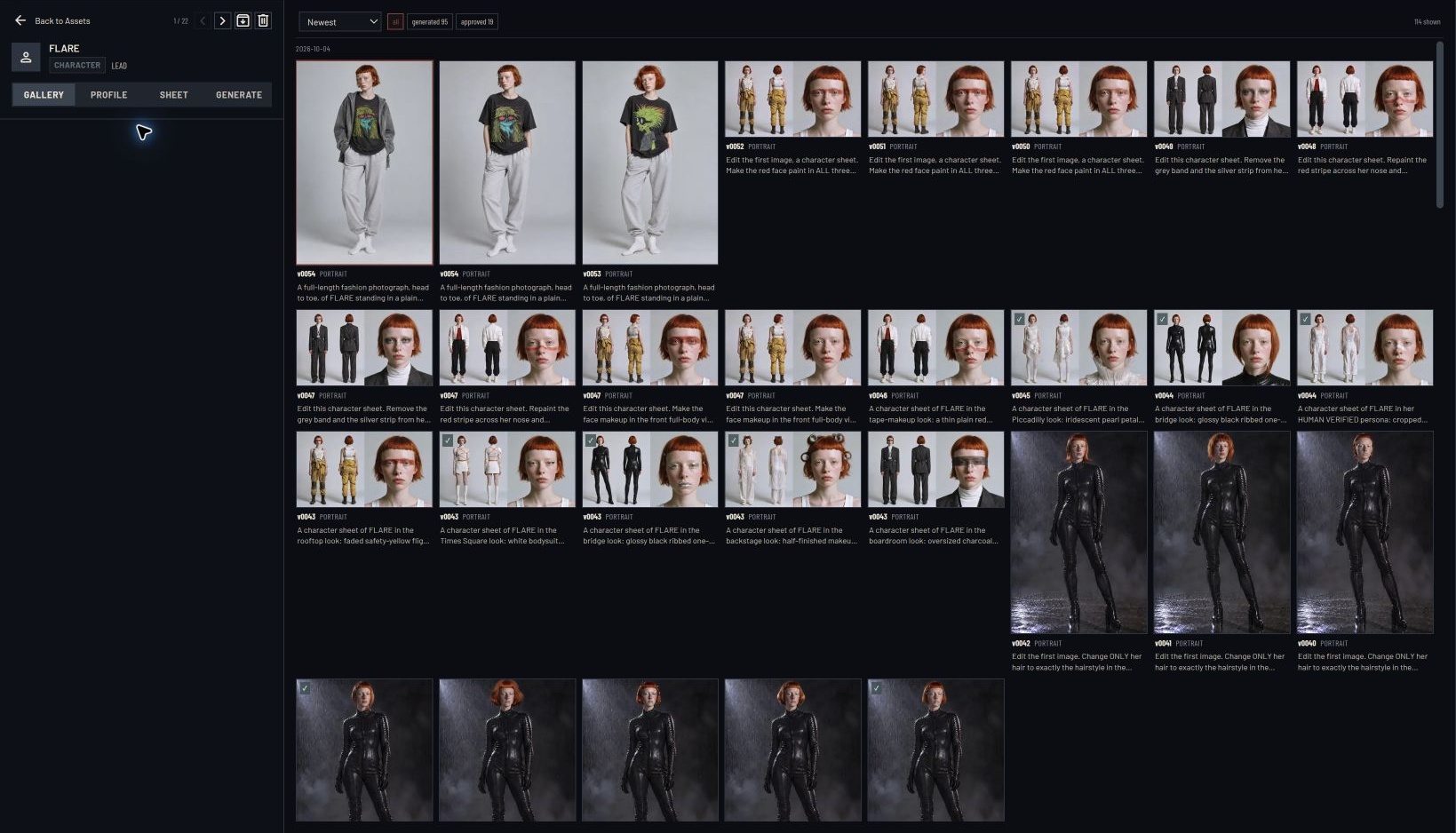
Character development: wardrobe, proportions, hair, and makeup explored across the same asset's version history. Full-size capture.
The bedroom needed the same kind of direction. We built the set in Blender and planned the cameras around its geography: the door, desk, bed, and windows. A shared room and named camera positions gave the crew concrete compositions to work from as we developed the shots.
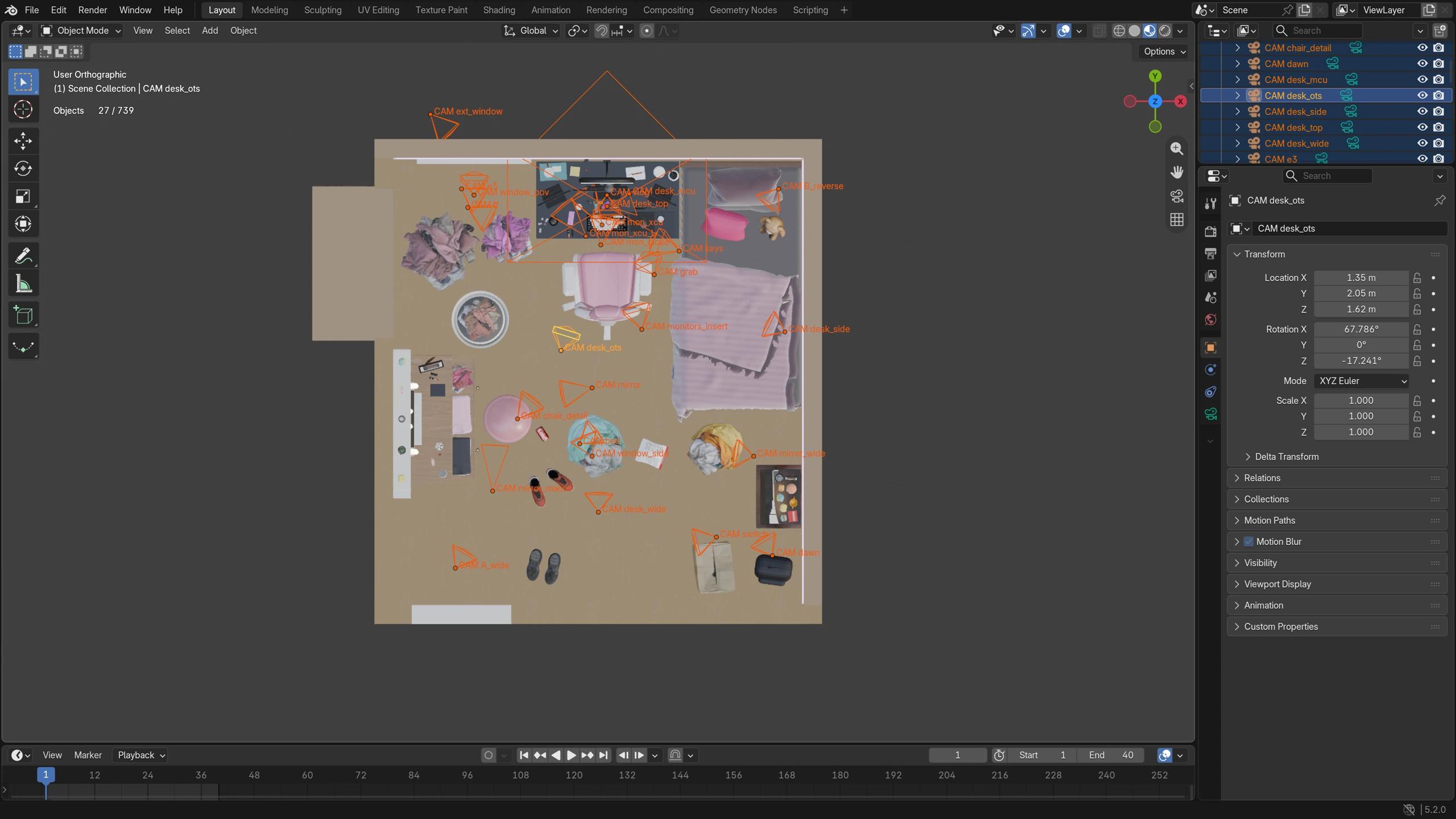
Historical bedroom camera planning, with the shot cameras arranged around the room. The ceiling LED layout in this development version still needed correction. Full-size capture.
We also used a posed CG maquette to develop expressions. The expression studies below show the intended performance in a simple form and a generated FLARE interpretation. I could review the pose, eyeline, and mouth shape, then judge how naturally that intent carried into her face.
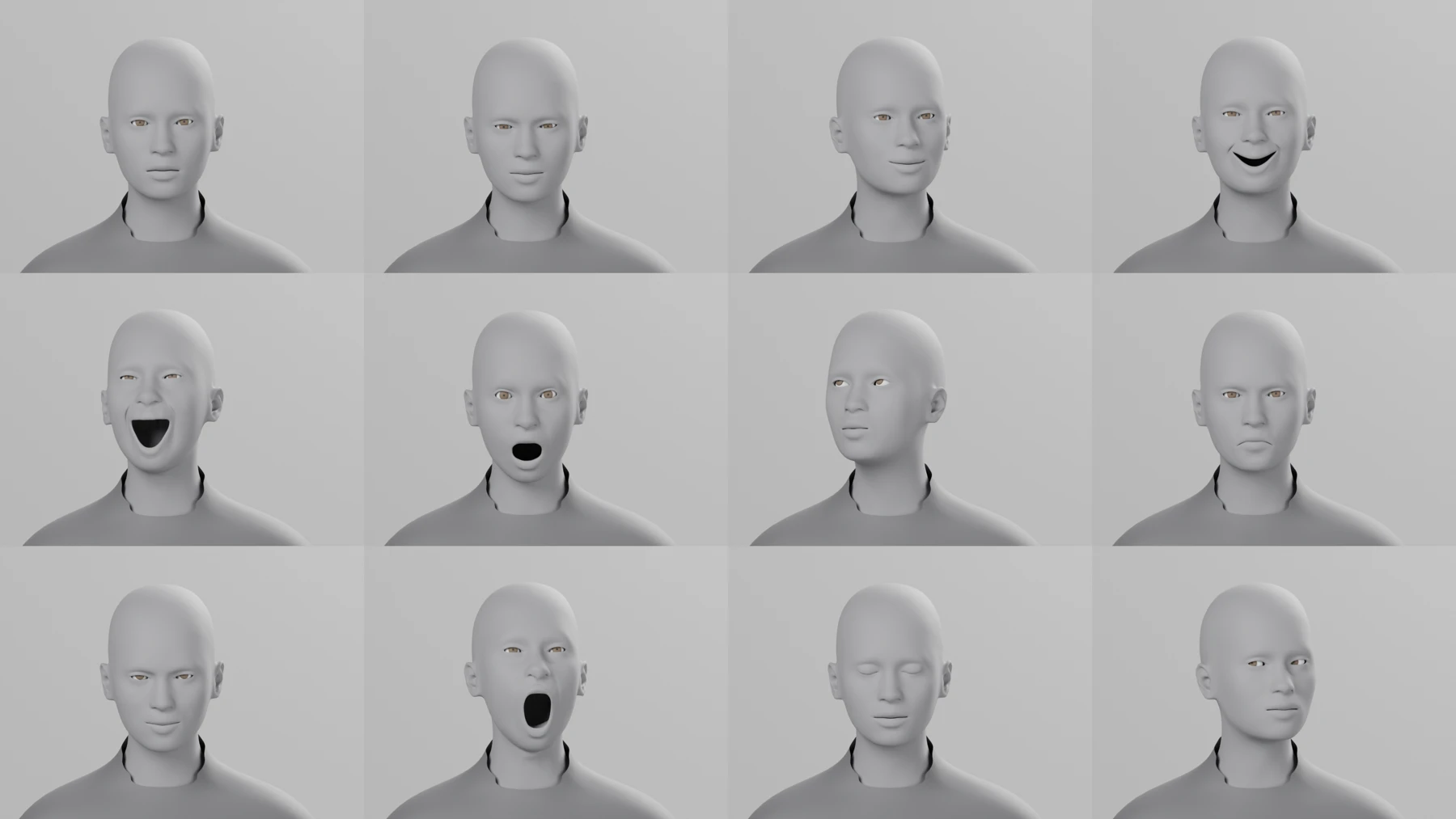
CG expression blocking. Full-size study.
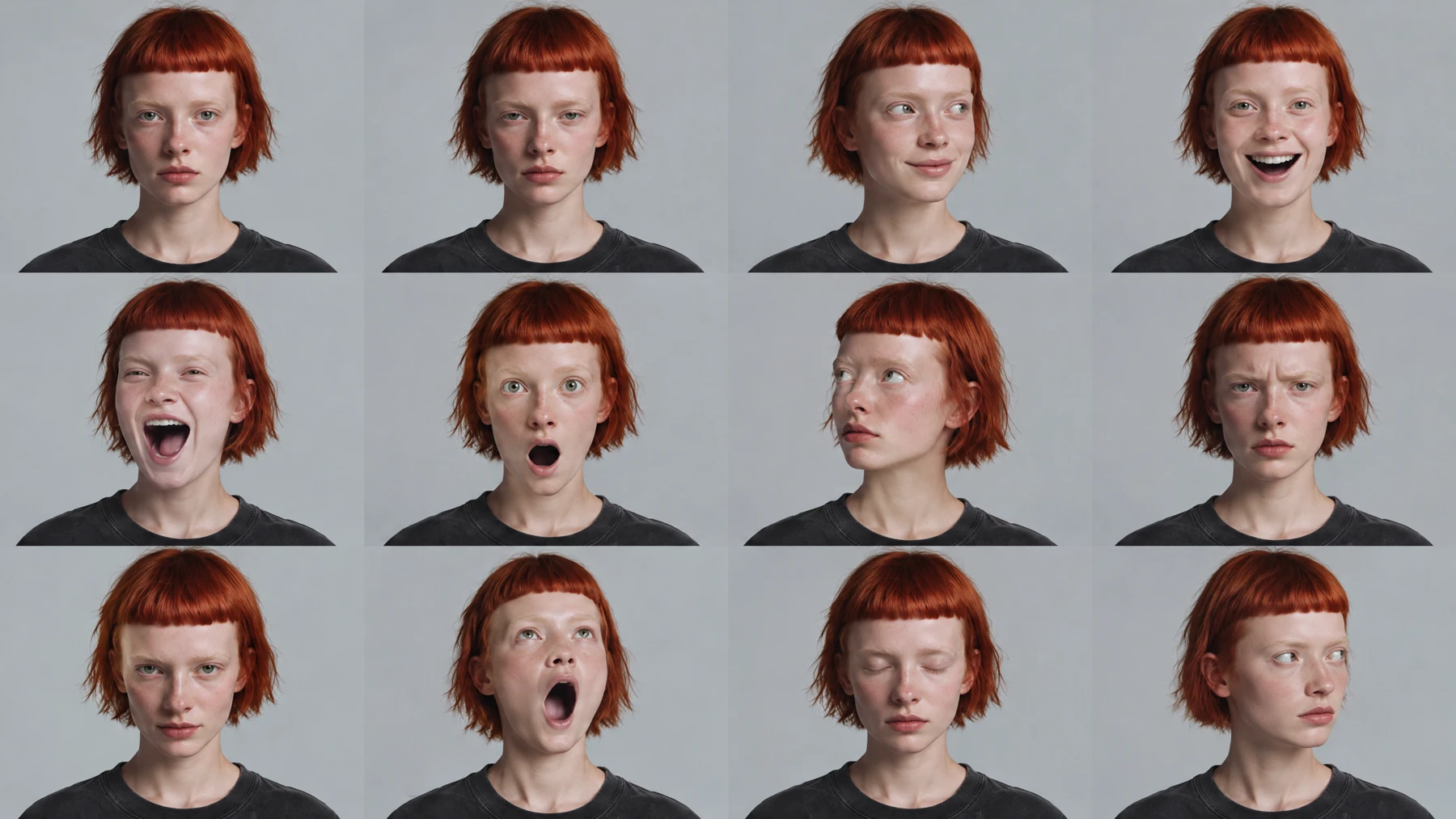
FLARE expression development, a second generated interpretation of the maquette study. Full-size study.
The shot direction carries that intent into timed action. In the light-switch sequence, the workspace breaks the action into two beats and brings the camera description, character movement, environment, and reference images together. The versions and notes remain alongside the shot as it develops.
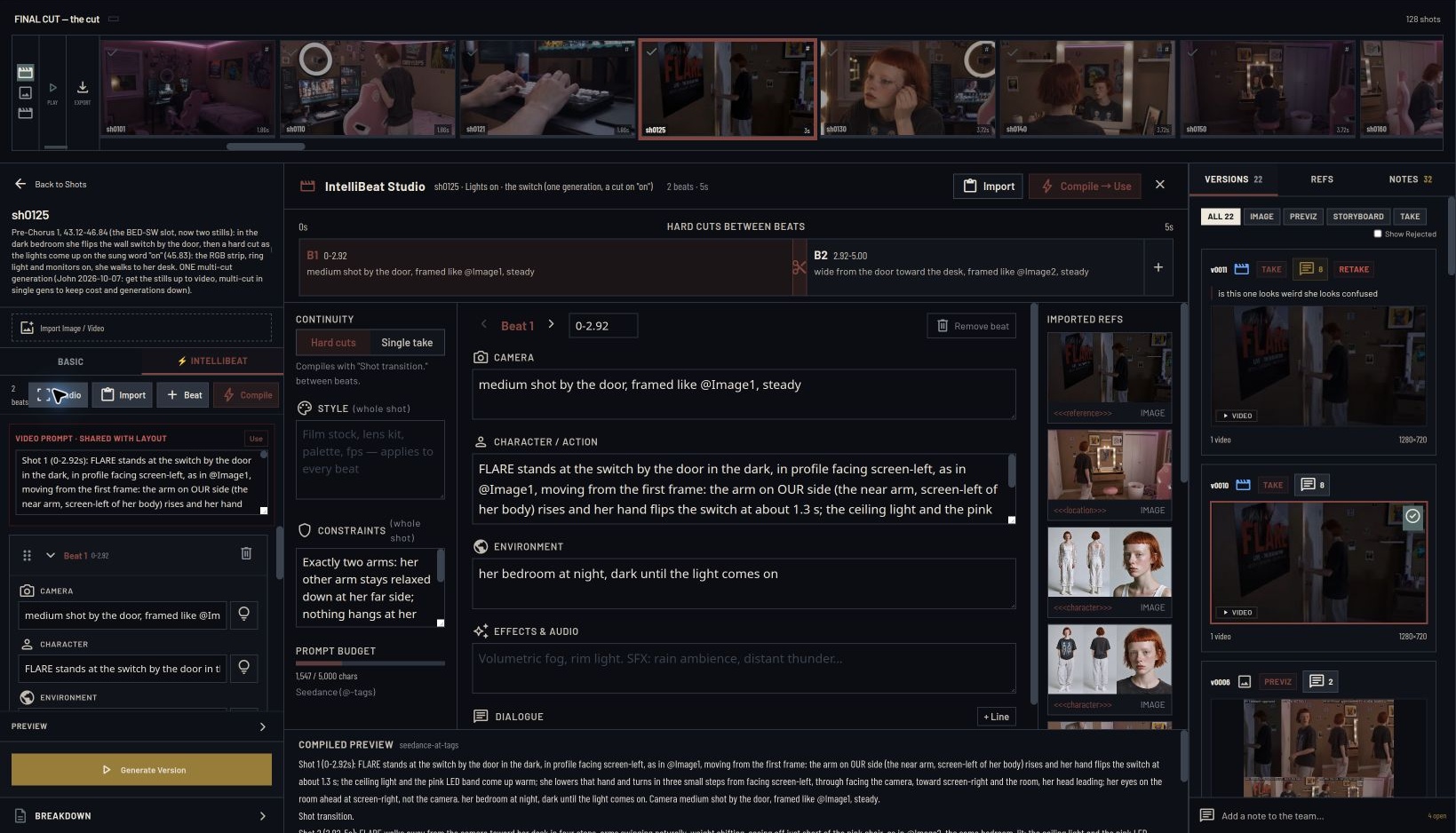
The light-switch shot in IntelliBeat Studio: two timed beats, camera and action direction, and linked references. Full-size capture.
Production review, built around how filmmakers work
I built this workflow around my experience as a CG supervisor on animated features and high-end VFX projects. The crew brings work to review, I give direction, and the next version comes back with those notes addressed. Intellistory carries that production process into a crew of AI agents.
Whenever the agents have work to show me, they assemble a review playlist. They can open it in my browser, with the shots and versions ready to play. I watch and give voice notes: what works, what needs changing, and what should be rejected or sent back for a retake. The notes stay connected to the work, and the agents pick them up for the next pass.
I don't have to click an approval button. The agents can recognize an approval, rejection, or retake from what I say and record that decision on my behalf. My intent supplies the verdict; the agents handle recording it and acting on the direction. That lets me keep watching and talking, as I would in a production review.
Hundreds of notes, given by voice
By the October 6 production snapshot, FINAL CUT had 415 review notes totaling about 18,100 words across 98 review playlists. I gave my direction by voice. One review batch alone covered 101 takes and roughly 8,300 words of notes.
The same snapshot recorded 892 verdicts: 629 approvals, 247 retakes, and 16 rejections. Those included 79 approvals recorded by agents from my stated intent. These are review decisions across versions and playlists, rather than a count of unique finished shots. Production continued beyond that snapshot.
The practical work crossed several disciplines: character and wardrobe development, location imagery, performance, graphic design, editing, and finishing. A consistent face reference did not settle every question. Body proportions, room layout, camera scale, and the relationship between adjacent shots all needed separate attention.
The most useful notes were observable: the figure is too large for the doors; the room has changed; the transformation needs to land on the beat. Those give the next pass something specific to solve.
Complete provenance, ready for the next model
I retain complete provenance for the production: the assets, their dependencies, the prompts, reference inputs, generation settings, and outputs that went into each generation. Each result has a history, and the project preserves how those results connect to one another and to the edit.
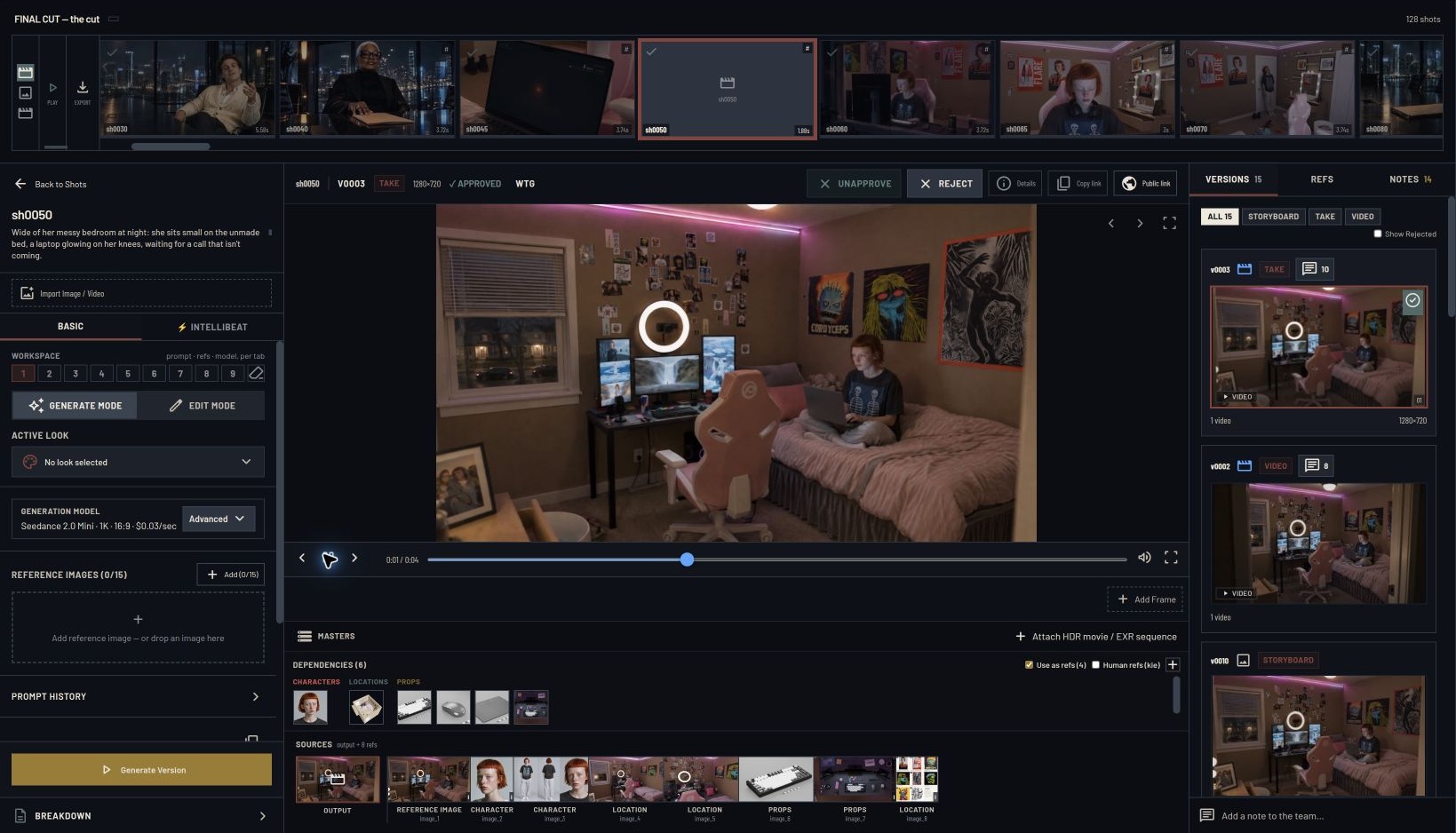
One bedroom take with its version history, six linked asset dependencies, and eight source references. The character, room, and props remain connected to the result. Full-size capture.
That makes the project something I can keep developing as the models improve. I can ask an agent to rerun a shot, a sequence, or the entire project with a new model, using the recorded prompts, references, and dependencies. The production history provides the starting point, and the new results come back through the same review process.
The roughly three-minute-fifty-second film still has to work as a complete piece. I judge the performance, graphics, and edit together, in motion, with the song playing.
FINAL CUT turns the production process into part of its visual language. FLARE's story is about taking control of the work, and making the film required the same continual exercise of judgment.
The project overview includes a short introduction. HUMAN VERIFIED explores the earlier FLARE film and the production lessons behind it.