HUMAN VERIFIED: giving a synthetic performer a human story
HUMAN VERIFIED is an original FLARE music film about a verification system losing its certainty. She begins inside a pristine, controlled world of silver surfaces and diagnostic graphics. As the film opens into coastal daylight, the system's attempt to classify her gives way to something harder to measure: a performance.
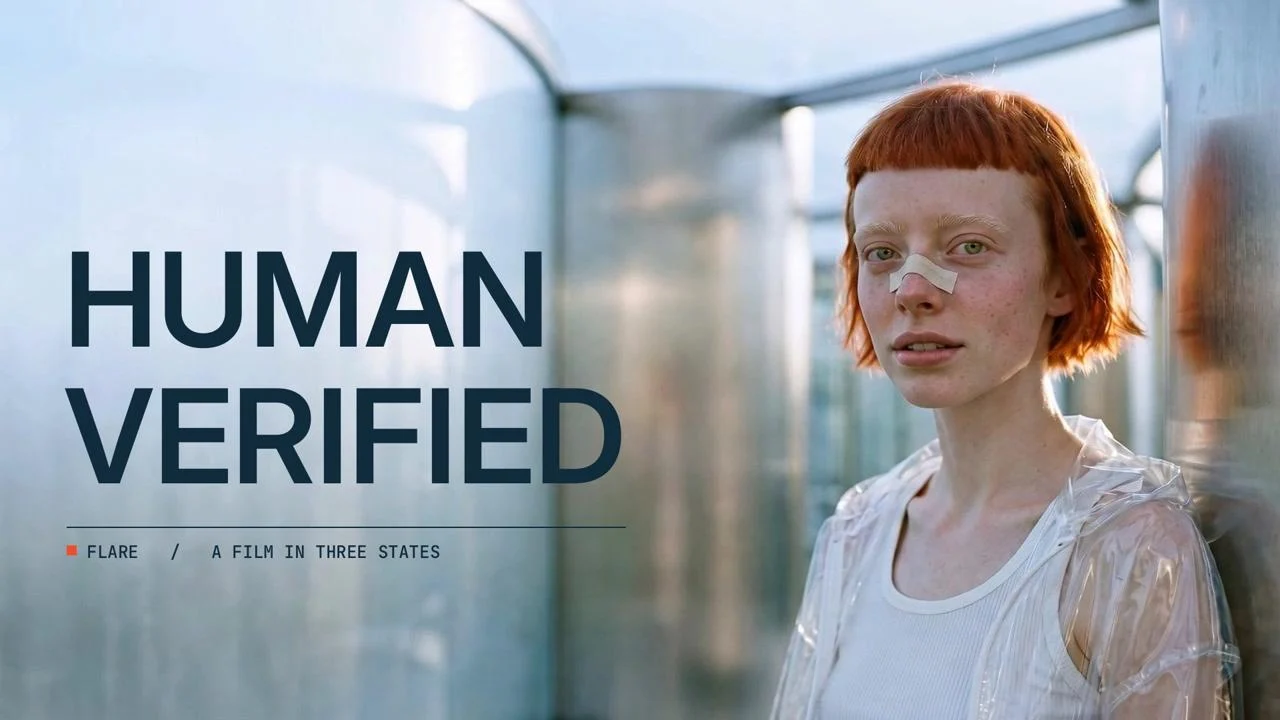
The film brings together the work I have been doing in generative imagery, compositing, motion graphics, and production tooling. Its roughly four-and-a-half-minute running time gave those pieces a sustained test: the character, the visual language, and the song had to hold together across a complete edit.
The script connects the song to the shots
The script brings the lyrics, performance direction, visual ideas, and shot timing into one document. Shot IDs and film timecodes connect each passage to the production, while the scene directions describe how the verification system appears around FLARE.
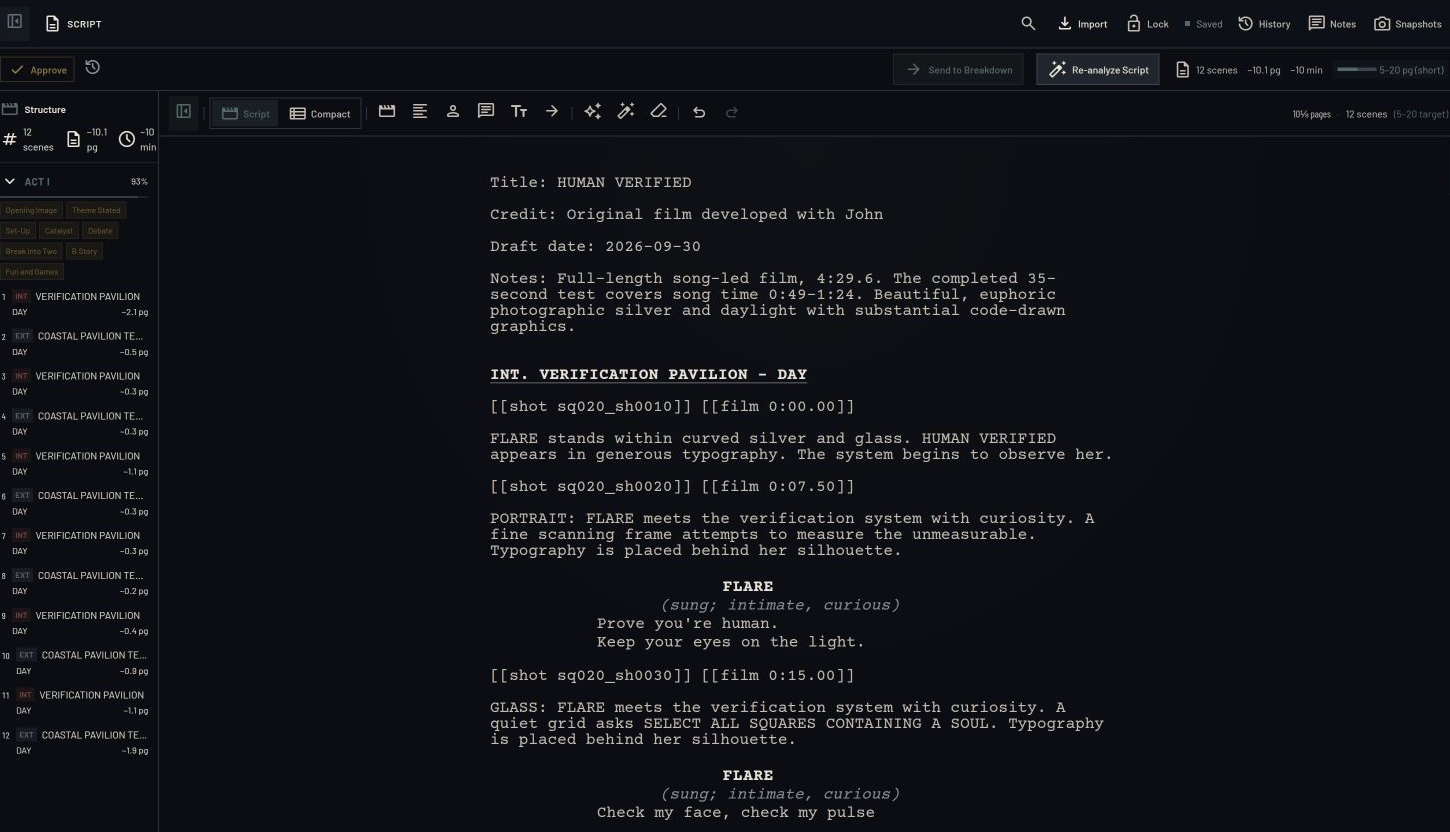
The September 30, 2026 script draft: the opening pavilion sequence, sung dialogue, and directions for the graphics. Full-size script capture.
A world that changes with the song
The visual progression runs from photographic silver interiors to warm coastal light. FLARE's red hair and distinctive nose tape give the audience a recognizable character through the changes in framing and environment. Diagnostic markings, CAPTCHA grids, and orbiting lines make the verification system visible around her.
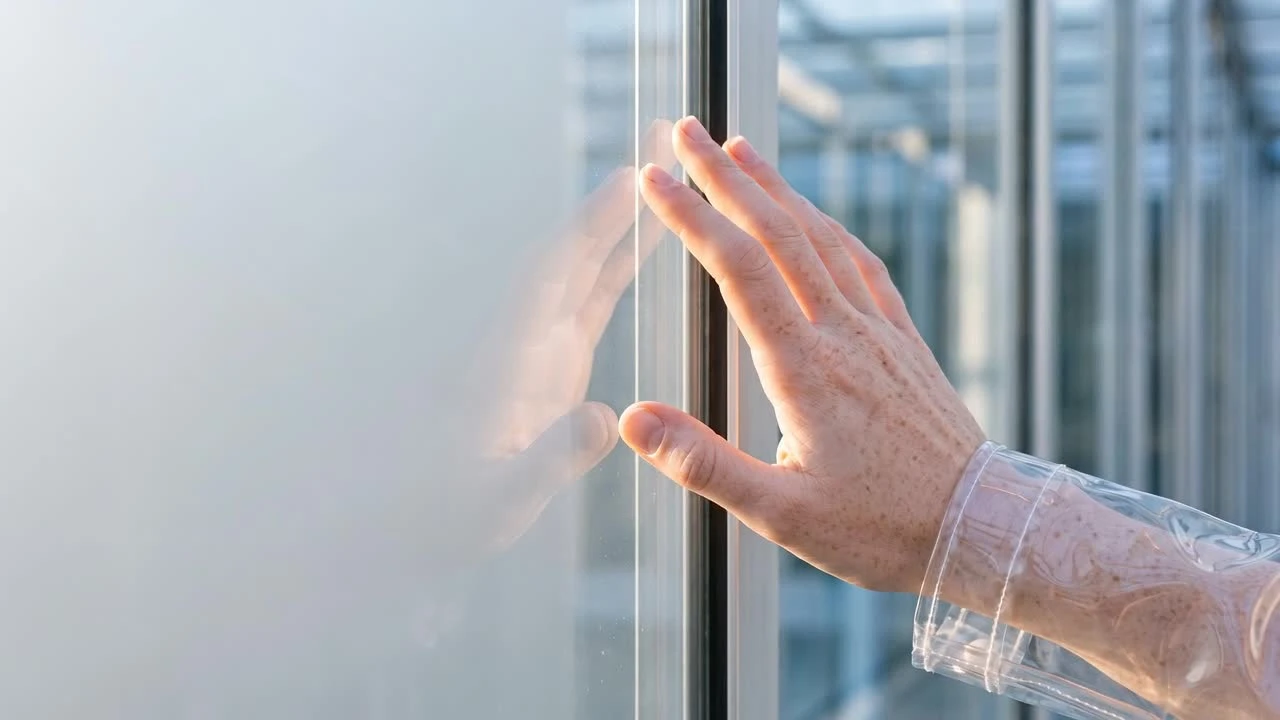
A frame from the generated source footage: skin, glass, and reflection bring the verification theme into a physical detail. Full-size frame.
The graphics carry part of the story. Their relationship to the performer matters as much as their design: a line passing behind her should feel like it belongs in the image, and a word arriving on a vocal should feel like part of the performance. Generated footage, subject masks, and a separate graphics layer let me direct those relationships in the composite.
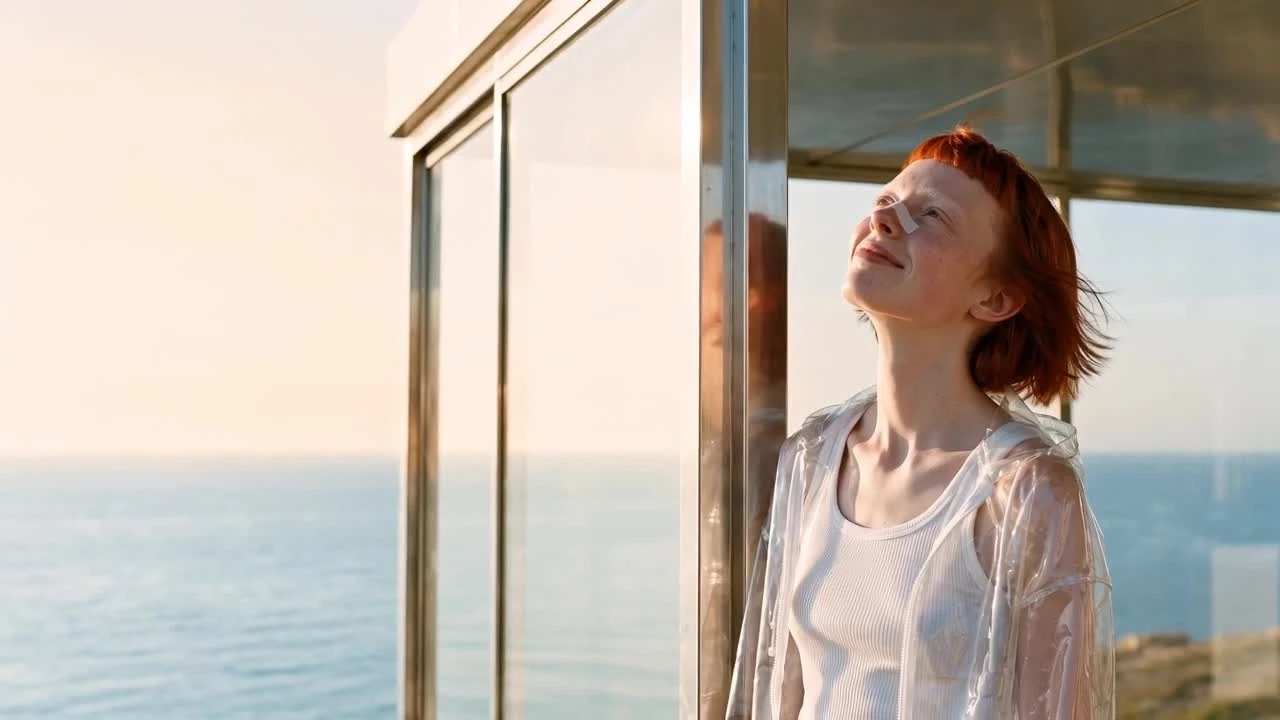
A source performance frame in the coastal light, before the film's graphics and kinetic lyrics are composited. Full-size frame.
The film takes shape in the edit
Our workflow starts with an animatic made of stills, cut to the song, with Remotion graphics layered over them. I can review the pacing, compositions, and kinetic lyrics as a complete piece while the pictures are still inexpensive to change.
We steadily replace those stills with video takes in the same edit. The film develops shot by shot: a held composition becomes a moving performance, the new take goes through review, and the graphics and timing are refined around it. That keeps each generation connected to the film it needs to serve.
The production combined an AI-generated song and imagery with directed shot selection, performance revisions, compositing, and software-driven animation. Intellistory held the project, character references, takes, and review versions, so a note could stay attached to the shot it concerned.
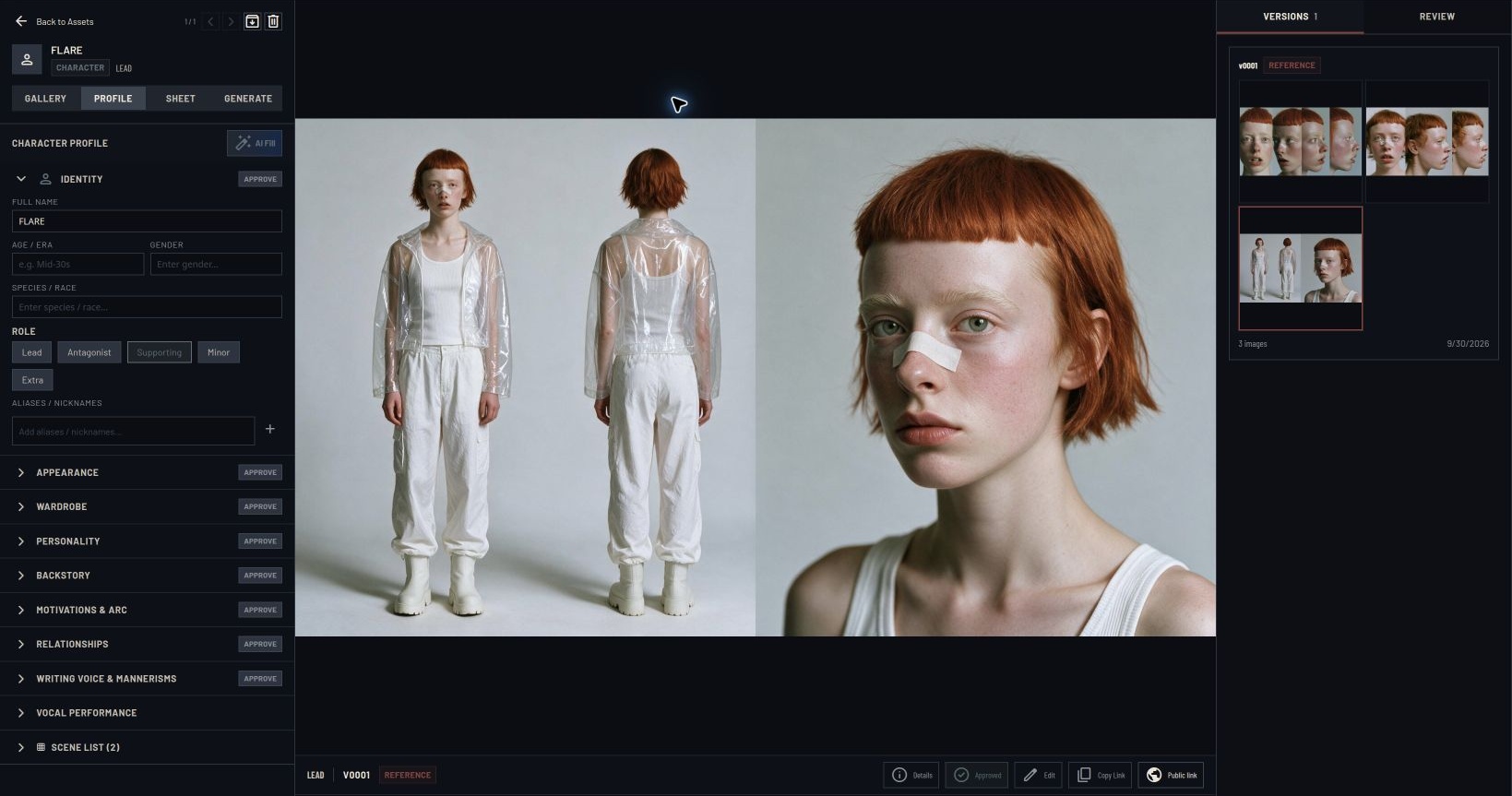
FLARE's character reference brings the face, hair, nose tape, and transparent jacket together in one place. Full-size capture.
The reference sheet gives the crew a shared visual target. The full-body views describe the silhouette and wardrobe; the closer views establish the face. Those references travel with the production as the framing, light, and performance change.
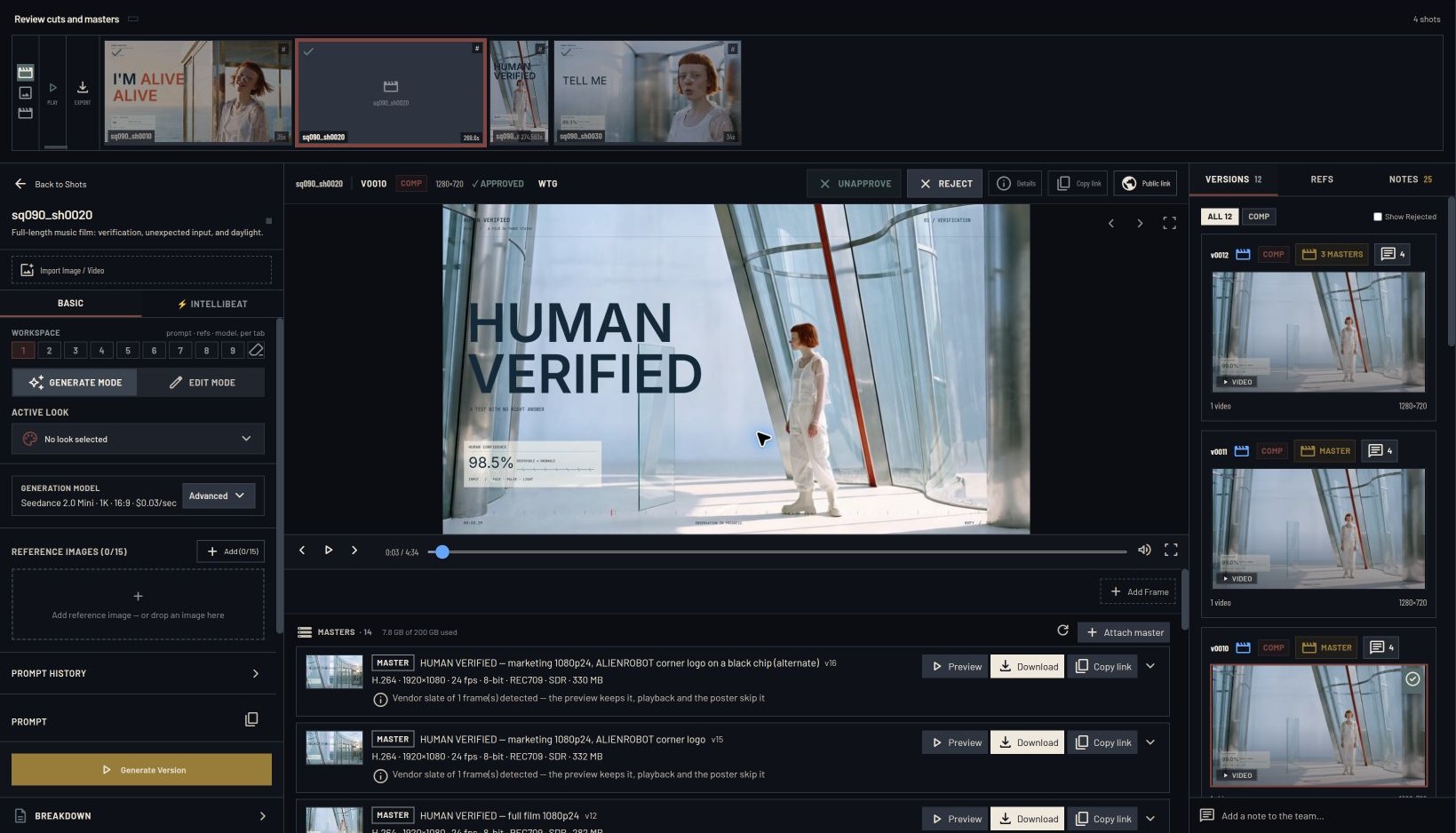
The full-film record holds the cut's version history and master exports alongside the player. This view has comp v10 selected, with later versions retained in the history. Full-size capture.
That review process comes from my experience as a CG supervisor on animated features and high-end VFX projects. When the agents have work to show me, they assemble review playlists and can open them directly in my browser. I watch the work and give voice notes, approving shots, rejecting takes, or asking for specific changes.
The agents can infer the verdict from my words and record it on my behalf, so I can keep reviewing without stopping to click an approval button. My direction stays attached to the shot and version, ready for the crew to act on and bring back for another look.
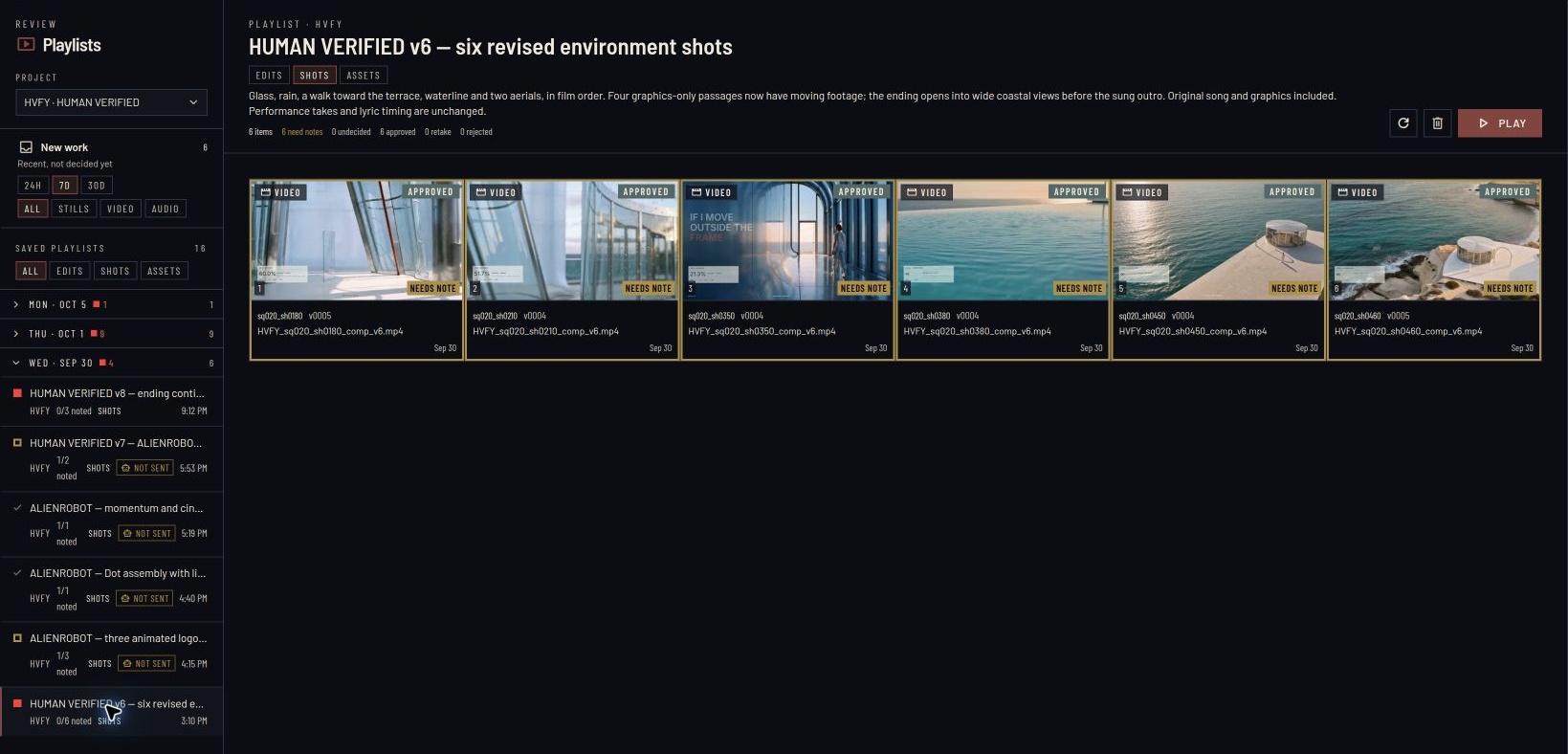
A production review playlist brings six revised environment shots together in film order, with their recorded approval and note status. Full-size capture.
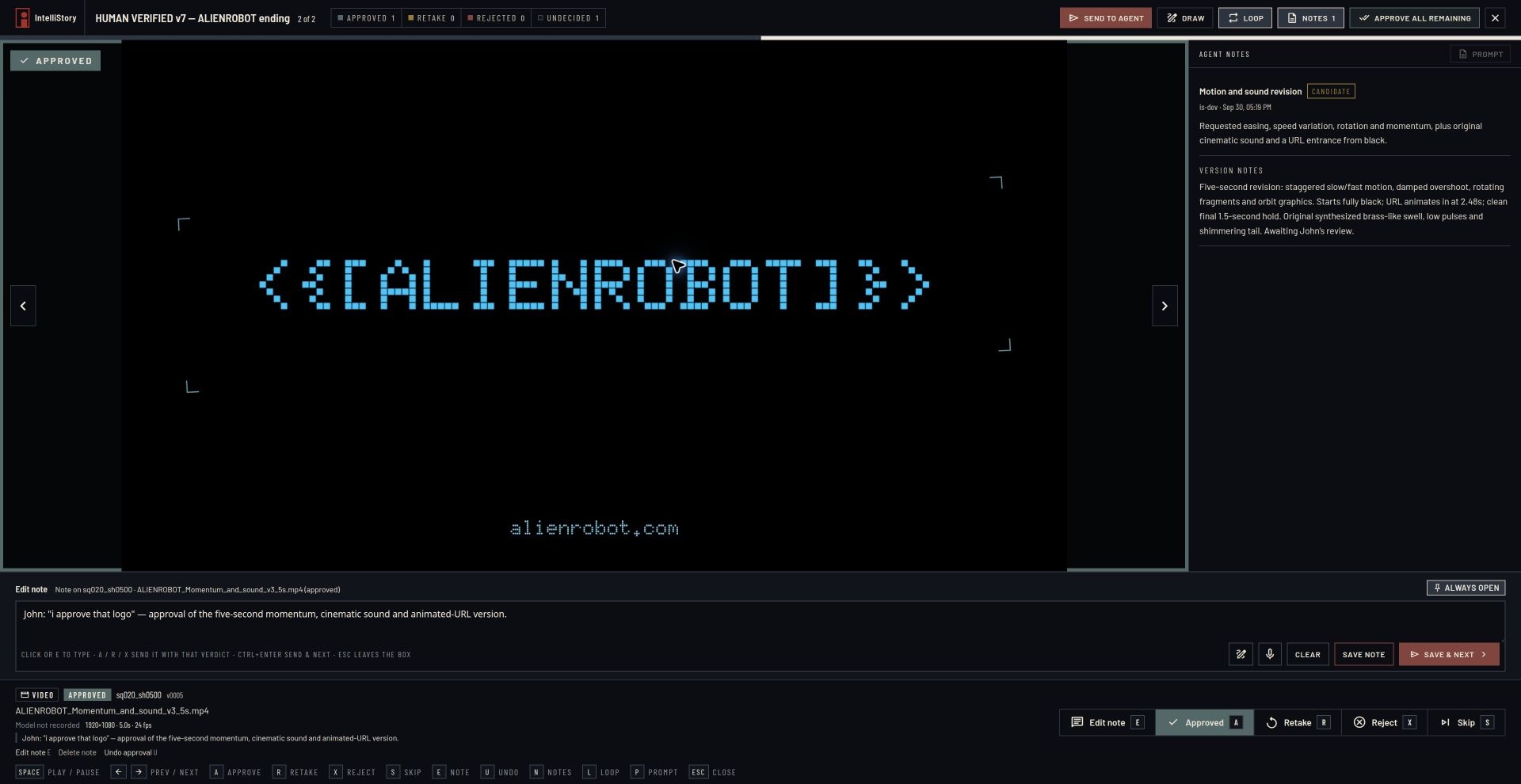
The ending review pairs the work with the agent's revision notes and my recorded approval. The note field and microphone control sit below the player. Full-size capture.
The revision work was specific. Sung passages needed a convincing relationship between mouth movement and the vocal. Wide shots needed to establish the coastal setting. Adjacent aerials needed to read as a continuous flight. Each of those problems required looking at the sequence in motion and making a decision about what the audience would see.
Character references helped keep FLARE recognizable, but environment continuity still needed its own attention. Matching the mood of two images did not guarantee matching architecture or geography. The film made that distinction very practical.
Every word has a place
The kinetic lyrics are part of the picture. Our software times each word to the song, while the edit determines where that word belongs visually. One useful rule came out of review: when a line starts just before a cut but is mostly sung in the incoming shot, its text belongs with the incoming shot.
That small decision changes how a sequence reads. The viewer gets one coherent line with the performance it describes, rather than the beginning of a sentence briefly appearing on an image that is already leaving.
The film engine renders the graphics and text against the song's timeline. That makes a timing adjustment repeatable across the full export and individual shot reviews. The final presentation also includes the animated Alienrobot signature and its sound.
What this project developed
I retain complete provenance over the assets, dependencies, prompts, reference inputs, generation settings, and outputs behind the work. That history makes the production reusable: as new models arrive, I can ask an agent to rerun a shot or the entire project with a new model, then review the new results against the existing film.
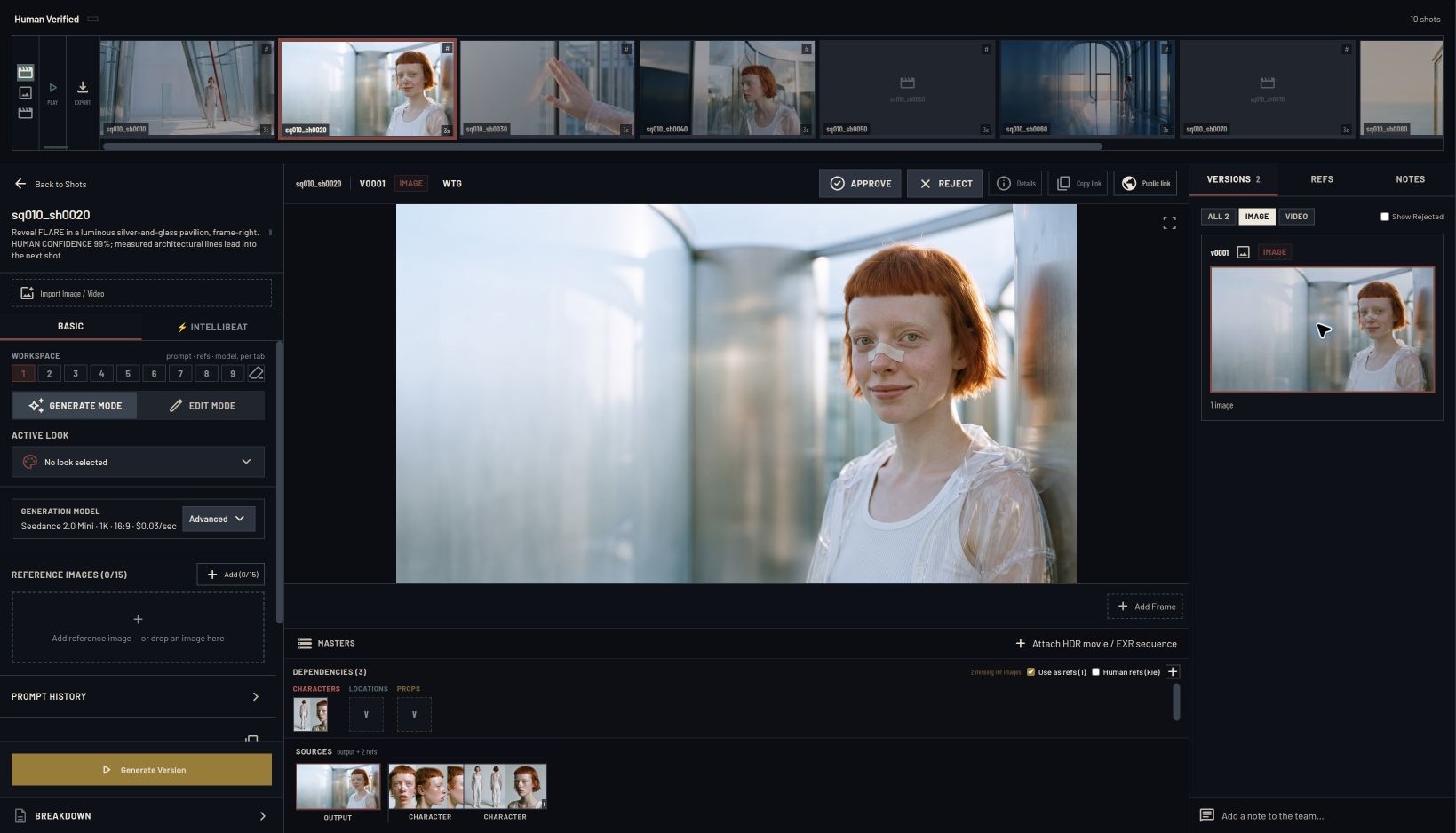
A source shot's record keeps its image and video versions together with dependencies and the character images used as references. Full-size capture.
HUMAN VERIFIED brought character direction, generated performance, graphic design, and shot review into one production process. It also gave me concrete lessons to carry into FINAL CUT: establish the world, review neighboring shots together, and keep refining the timing until the graphics support the song.
The human work runs through the whole film: choosing the takes, judging continuity, shaping the performance, and deciding when a shot works in the cut.
The project overview sits alongside FINAL CUT, the next FLARE film.